.png)
Elastomer 3D Printing Guide: A Comprehensive Analysis of FAM and FDM Technologies
- 2 days ago
- 4 min read
In additive manufacturing, selecting the appropriate elastomeric material is critical to achieving a product’s intended functionality. Whether creating high-fidelity medical models, wearable prototypes, or industrial seals, engineering teams must navigate the trade-offs between manufacturing throughput and the mechanical performance of the final part.
Current elastomeric 3D printing solutions typically diverge into two primary technological paths: Fused Deposition Modeling (FDM) for thermoplastics and Fluid Additive Manufacturing (FAM) for liquid-state materials. Distinguishing between their extrusion mechanisms and material behaviors is critical for engineering teams looking to transition smoothly from PoC (Proof of Concept) to functional performance testing.
Technical Principles: Thermal Phase Change vs. Precision Fluid Extrusion
FDM (Fused Deposition Modeling)
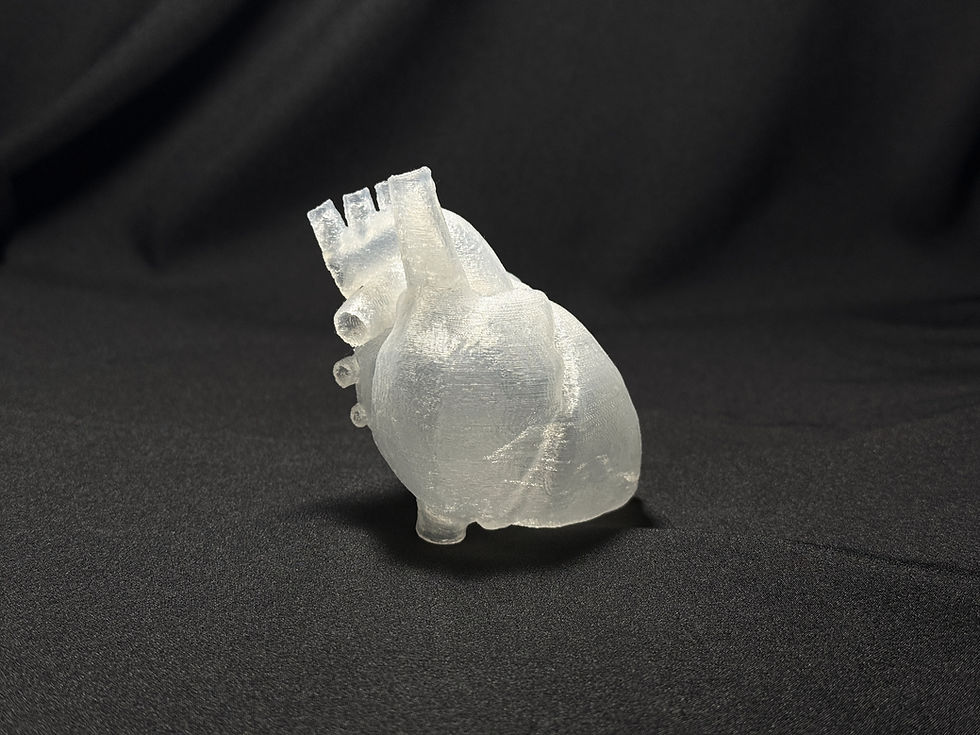
FDM fabricates parts from thermoplastic elastomers (TPE/TPU) by extruding solid filament through a heated nozzle. The process centers on a thermal cycle—melting the material for deposition and relying on ambient cooling for solidification. However, this reliance on thermal phase transitions often introduces internal stresses; in large-scale prints, this frequently manifests as shrinkage, delamination, or warping. Furthermore, layer bonding and dimensional accuracy remain highly sensitive to fluctuations in the printing environment.
FAM (Fluid Additive Manufacturing)
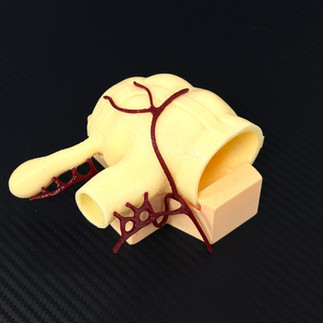
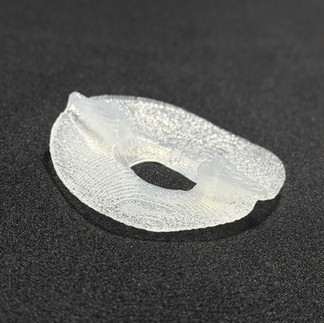
Engineered specifically for LSR and RTV silicone, FAM replaces conventional thermal melting with stepper-motor-driven screw extrusion. This mechanical approach ensures precise volumetric dosing of high-viscosity fluids, eliminating the inconsistencies of pneumatic systems. By fine-tuning parameters within the FAMufacture slicing software, the system maintains superior flow consistency to fabricate functional silicone components with complex geometries and intricate micro-structures.

Technical Selection: Transcending the Limits of Thermoplastic 3D Printing
While Fused Deposition Modeling (FDM) remains a cost-effective choice for early-stage geometric verification, its "melt-and-cool" cycle inherently limits the material's performance. Thermoplastic parts often hit a physical ceiling when exposed to high temperatures, cyclic stress, or stringent biocompatibility standards. As R&D progresses from visual prototyping to functional validation, the focus shifts to how effectively a system can process non-thermoplastic fluids like silicone.
The ultimate goal of any prototyping workflow is to simulate the performance of an end-use product. By leveraging stepper-motor-driven screw extrusion, FAM produces components with mechanical properties identical to traditionally molded silicone. This offers developers a reliable, quantitative benchmark for technical selection, ensuring that 3D-printed parts meet the rigorous demands of industrial and medical applications.
Dimensional Precision and Support Structure Management
Dimensional Accuracy and Low-Shrinkage Stability
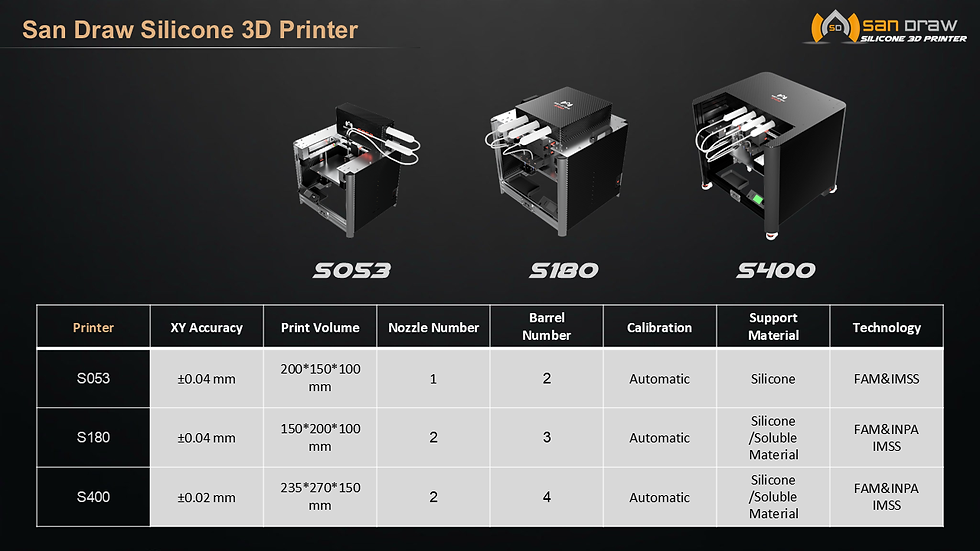
FAM technology leverages high-resolution stepper drives to achieve a mechanical precision of ±0.02 mm to ±0.04 mm. While FDM elastomers often suffer from dimensional distortion due to thermal contraction, FAM maintains a shrinkage rate of less than 1%. This stability applies to both room-temperature vulcanizing (RTV) silicone and 1:1 mixed Liquid Silicone Rubber (LSR). By eliminating the volatile variables associated with thermal cooling, FAM ensures that the final part adheres strictly to the original CAD specifications.
Advanced Water-Soluble Support Solutions
Managing complex geometries or aggressive overhangs in FDM typically involves manual support removal. This labor-intensive post-processing often leaves physical artifacts on contact surfaces and makes it virtually impossible to clear internal cavities.
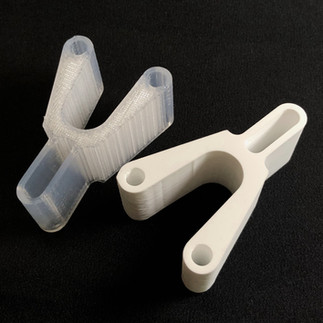
In contrast, FAM is fully compatible with SP65 water-soluble support material. This specialized filament provides the structural rigidity required to stabilize liquid silicone during deposition, effectively preventing structural drift or collapse. Once the part is cured, the supports dissolve entirely in water without leaving chemical residues. This capability ensures a pristine surface finish and unlocks design freedom for components with intricate internal channels, bores, or micro-features—drastically improving overall production yield.

Material Science: Thermoset Silicone vs. Thermoplastic Performance Limits Thermal Stability in Extreme Environments
Thermal Stability in Extreme Environments
San Draw’s silicone materials maintain operational functionality across a temperature spectrum of -50°C to 250°C. From a molecular standpoint, thermoset silicone retains its mechanical integrity and structural cross-linking at elevated temperatures. This contrasts with thermoplastic elastomers (TPE/TPU), which undergo thermal softening and dimensional deformation when heated beyond their glass transition or melting points. Consequently, thermoset components exhibit minimal creep and maintain dimensional stability throughout rigorous thermal cycling and volatile environmental conditions.
Certified Biocompatibility and Application Standards
San Draw silicone is ISO 10993 certified, meeting international industry standards for biocompatibility. This certification records the material's properties for applications involving prolonged skin contact, such as medical simulation models and physiological training systems. Based on these testing conditions, the material maintains chemical stability for the development of components requiring specific skin-contact profiles, including wearables and anatomical models.
Hardware Specifications and System Configurations
Mid-Sized Systems (S180 / S053)
S180 and S053 platforms are categorized by nozzle configuration. S053 is a single-nozzle system, while S180 is a dual-nozzle system that supports the use of water-soluble support materials for complex geometries.
Industrial-Scale System (S400)
S400 is a dual-nozzle system designed for higher throughput. It is equipped with 4 material cartridges, allowing it to support two sets of two-part silicones simultaneously. This configuration enables the integration of materials with different Shore hardness levels in a single print.
Conclusion: Moving from Prototyping to Functional Silicone Performance
In elastomer development, shifting from geometric validation to functional testing represents a critical technological pivot. While Fused Deposition Modeling (FDM) remains an efficient tool for initial visual confirmation, the inherent physical limits of thermoplastics often restrict their performance under rigorous testing environments.
FAM (Fluid Additive Manufacturing) is a technical bridge between rapid prototyping and industrial-scale production. The system incorporates a stepper-motor-driven screw extrusion mechanism, enabling the precise, volumetric delivery of high-viscosity silicone. This mechanical control maintains consistent layer deposition, resulting in 3D-printed components with mechanical properties equivalent to traditionally molded silicone. FAM-produced parts exhibit stable performance across key indicators, including thermal resistance, biocompatibility, and long-term fatigue strength, providing a quantitative benchmark for end-use application requirements.
When project requirements shift from geometric validation to functional material parity, FAM offers the technical framework to bypass conventional manufacturing constraints.
To evaluate how FAM technology can be integrated into your silicone development workflow—or for specific material selection inquiries—contact our engineering team for a technical assessment:
📧 Email: info@sandraw.com
We provide objective technical evaluations and material recommendations based on your specific application environment and operational requirements.